10 Best Roof Drains for Global Buyers?
Choosing among the 10 Best Roof Drains for Global Buyers requires more than comparing prices or outlet sizes. Roof Drains protect roofing membranes, insulation, façades, and occupied spaces from standing water. A blocked outlet can turn a small storm into a costly interior failure.
The climate evidence is becoming harder to ignore. The IPCC Sixth Assessment Report states that heavy precipitation events have increased across many land regions since the 1950s. The World Meteorological Organization also reports rising weather-related risks and stronger rainfall extremes in many locations. These findings make drainage capacity, overflow protection, and maintenance access practical buying priorities. Not marketing features.
Building performance matters too. The 2024 Global Status Report for Buildings and Construction, published by UNEP, identifies buildings as responsible for about 32% of global energy use and 34% of global carbon dioxide emissions. Efficient roof drainage supports longer membrane life and fewer replacement-related impacts. Still, a drain alone cannot make a building sustainable.
This guide evaluates leading Roof Drains for commercial, industrial, residential, and low-slope applications. The comparison considers flow capacity, body material, flange design, clamping rings, debris control, insulation compatibility, and installation conditions. It also references drainage principles in EN 12056-3 and relevant North American plumbing requirements, including ASME A112.6.4. Regional rainfall data should guide final sizing. Product catalogs are useful, but site calculations matter more.
Some choices remain difficult. Published flow rates are not always tested under identical conditions. That weakens simple rankings. Buyers should verify hydraulic performance, warranty terms, replacement parts, and local approval requirements before placing an international order. A dependable drain is quiet, visible, and ready when the roof is not.
What Are Roof Drains and Why Do Global Buyers Need Them?
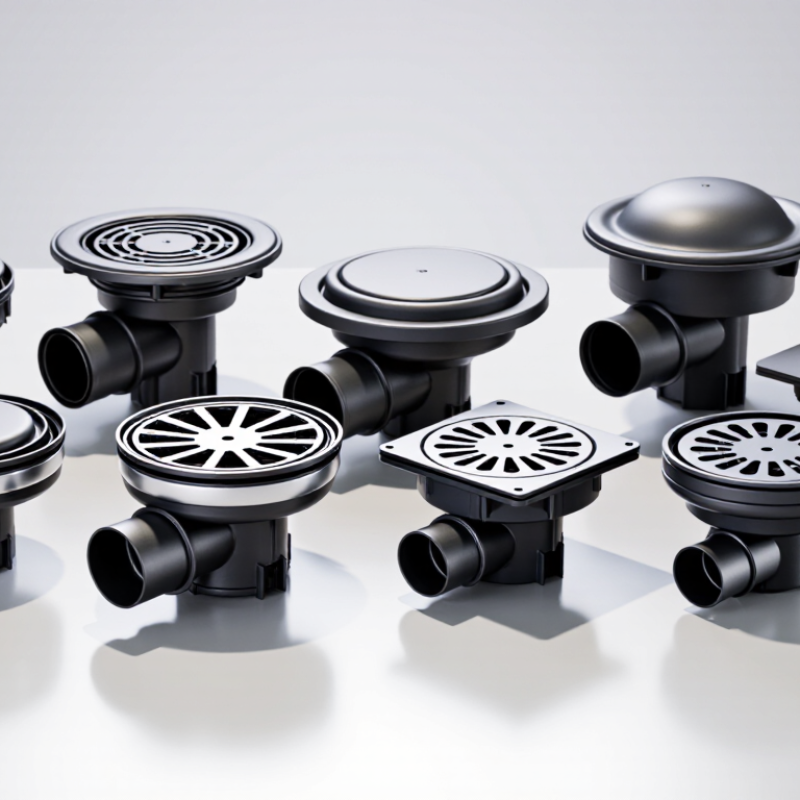
Roof drains are engineered outlets that move rainwater from a flat or low-slope roof into internal pipes or external leaders. They prevent ponding, membrane damage, structural overload, and unsafe water discharge near building entrances. For global buyers, the choice is rarely just about diameter or price.
A suitable drain must match rainfall intensity, roof area, pipe capacity, and local construction rules. Climate matters greatly. A tropical site may need rapid-flow outlets, while a cold region may require insulation and freeze-resistant detailing.
Buyers should check body material, strainer height, flange compatibility, and connection type. The drain must also work with the roof membrane, not merely fit the pipe.
During practical inspections, blocked strainers often cause more trouble than weak products. Leaves, gravel, and ice can reduce flow within weeks. A removable dome, accessible basket, and clear maintenance route are valuable details.
However, a catalog specification cannot replace proper hydraulic calculation. That is an easy mistake.
Global purchasers should request test data, installation drawings, corrosion information, and documentation for local compliance. They should also confirm spare-part availability and warranty conditions before ordering.
One overlooked fitting can delay an entire roofing project. Load testing and water testing on site remain sensible, even when the product appears reliable.
How to Evaluate Roof Drain Materials, Designs, and Performance
Choosing among the 10 best roof drains requires more than comparing prices or outlet sizes. Material affects service life, maintenance, and compatibility with the roof system. Cast iron offers strength under heavy traffic and impact. Stainless steel resists many corrosive environments. Aluminum is lighter, but it may react with nearby metals. Plastic drains can suit smaller roofs, although temperature changes may cause movement.
Design deserves equal attention. Check the outlet diameter, flange width, clamping ring, and debris guard. A wide flange should sit firmly beneath the waterproofing layer. The drain bowl must connect securely with the selected membrane. During site inspections, I look for low points where leaves collect after rainfall. Small gaps matter. A drain can appear solid yet leak around its seal.
Performance data should include flow capacity, load rating, temperature limits, and corrosion testing. Compare these figures with local rainfall intensity and roof area. Ask for installation drawings and maintenance instructions, not only a product photograph. I once accepted an attractive drain with limited technical data; that decision created avoidable uncertainty. Independent testing helps, but installation quality still controls real performance. Consider freeze-thaw cycles, salt exposure, ultraviolet light, and access for cleaning. No design is perfect. A practical choice balances material strength, drainage speed, repair access, and long-term availability in the buyer’s market.
The 10 Best Roof Drains for Different Roof Types and Climates
10 Best Roof Drains for Global Buyers
The 10 Best Roof Drains for Different Roof Types and Climates
No roof drain wins everywhere. Selection depends on slope, rainfall intensity, debris, insulation, and maintenance access. For low-slope commercial roofs, a standard internal dome drain offers reliable flow. Siphonic drainage suits large roofs with long pipe runs. It needs precise engineering. Overflow scuppers provide a visible emergency route when primary outlets clog. They are valuable on flat roofs and parapets.
For green roofs, choose a drain with an inspection box and root-resistant protection. U.S. Environmental Protection Agency research indicates green roofs may retain 50–80% of annual rainfall, depending on depth and climate. Gravel-ballasted roofs need wide gravel guards. Roof decks benefit from channel drains near doors and edges. Pitched metal roofs often need leaf guards and larger outlets. In cold climates, heated drains and insulated connections can reduce freeze blockage. In tropical climates, high-capacity outlets handle short, intense storms better than narrow designs.
NOAA Atlas 14 precipitation-frequency data should guide local sizing. Many building codes also use a 100-year hourly rainfall rate for roof drainage calculations. FM Global drainage guidance stresses emergency overflow paths, structural loading, and regular inspection. Corrosion-resistant metal suits coastal air, but even durable materials fail with poor detailing. I would recheck every design against actual maintenance access. That step is often missed. A drain that looks efficient on paper may become useless beneath leaves, ice, or growing media.
How to Compare Drainage Capacity, Standards, and Installation Methods
For global buyers, roof drain capacity should be measured against rainfall intensity, roof area, and outlet size. A larger outlet is not automatically better. Ask for tested flow rates at a stated water depth, not only a maximum diameter. Local rainfall records and building codes should guide the calculation.
Standards may differ between regions, so check test methods, material grades, fire performance, and corrosion resistance. A certificate helps, but it does not replace engineering review. That detail is often missed.
Installation method also changes drainage performance. Vertical drains usually suit direct downpipe connections and compact roof layouts. Horizontal outlets can work well where ceiling space restricts vertical pipework. Siphonic systems require coordinated pipe sizing, specialist design, and careful site control.
Confirm membrane compatibility, clamping-ring dimensions, grate height, and access for cleaning. A drain that fits the drawing may still fail on a poorly sloped roof. Small errors matter.
Request sectional drawings, installation tolerances, and maintenance instructions before purchasing. On site, inspect the outlet flange and test water flow after waterproofing.
I have found that comparison tables can hide important assumptions, especially when capacity figures use different test conditions. Recheck every number against the actual roof and local code.
What Maintenance, Warranty, and Supplier Factors Should Buyers Check?
10 Best Roof Drains for Global Buyers
When comparing roof drains, maintenance access should matter as much as drainage capacity. A drain with a removable grate allows workers to clear leaves, grit, and ice without damaging the roof membrane. Check the outlet size, flow data, and compatibility with local pipe systems. Regional weather also matters. UV exposure, heavy rain, salt air, and freezing temperatures can shorten service life. A drain may perform well in one climate and fail early in another.
Warranty language deserves careful reading. Confirm coverage for the body, seals, coatings, and connected accessories. Ask whether labor, shipping, and replacement parts are included. Some warranties exclude poor installation, blocked outlets, or chemical exposure. That is easy to miss. Suppliers should provide installation drawings, material certificates, test reports, and clear maintenance instructions. Independent testing is more convincing than broad marketing claims. Still, documents can become outdated, so verify revision dates.
Tips: Request a sample before placing a large order. Inspect its casting, threads, gasket fit, and surface finish. Ask suppliers how quickly they handle leaks or missing parts. Check references from projects in similar climates. A low purchase price can become expensive after repeated cleaning, delayed repairs, or unavailable seals. I would also confirm packaging quality, because damaged edges may not be visible until installation.