How to Choose Commercial Roll Up Doors for Your Business

Choosing commercial roll up doors is not simply a matter of comparing prices and finishes. The right door must match daily traffic, opening size, security needs, and the building’s working conditions. A warehouse with forklifts needs different performance than a retail loading area or a busy restaurant back entrance. Every detail matters.

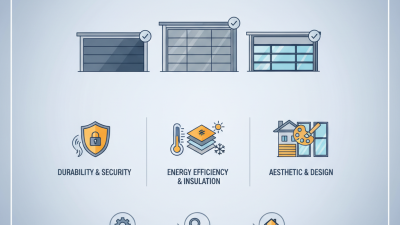
Start with real operating habits. How often will the door open each hour? Will employees lift it manually, or should an electric operator control movement? A steel door may provide strong impact resistance, while an aluminum model can offer a cleaner appearance and lower weight. Insulated panels can help stabilize indoor temperatures, especially when cold air enters through a frequently used loading bay. Small gaps around the guides may later become costly energy leaks.

Safety deserves careful attention. Look for reliable brakes, properly guarded moving parts, emergency release features, and controls that suit trained operators. Confirm that the selected design aligns with local building, fire, electrical, and accessibility requirements. A qualified installer should measure the opening, inspect the wall structure, and explain maintenance intervals. Do not skip this step.

The best choice is rarely the most impressive brochure option. It is the door that performs consistently under actual business pressure. Still, planning can be imperfect. Future deliveries may become larger, or traffic may increase unexpectedly. Leave practical room for change, and evaluate service support, replacement parts, warranty terms, and repair response before signing an order. A dependable door protects workflow, people, and long-term operating costs.
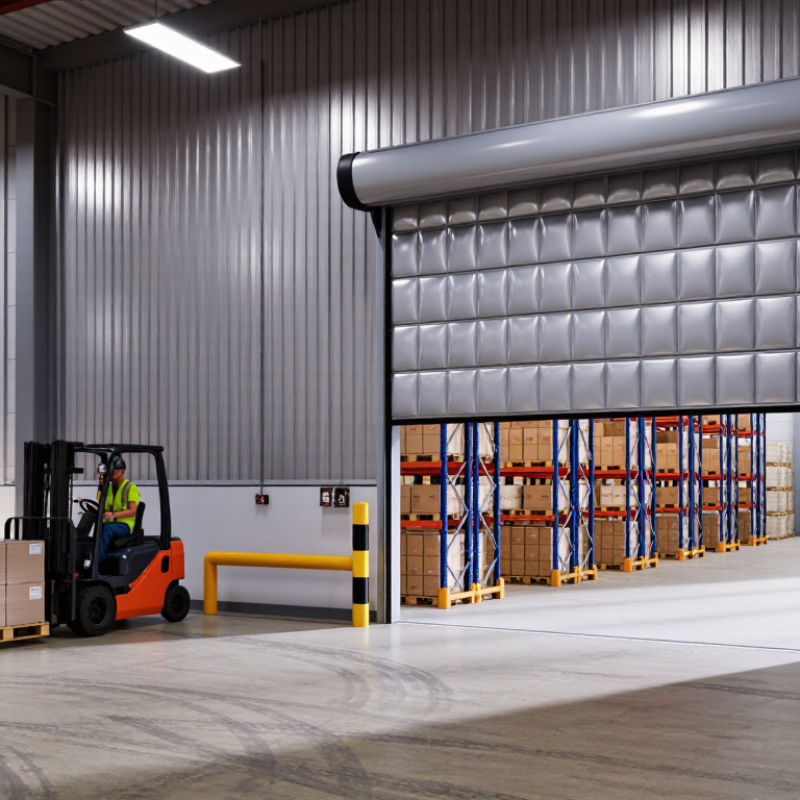
How to Choose Commercial Roll Up Doors for Your Business

Define Your Business’s Roll-Up Door Requirements

Before choosing a commercial roll-up door, define how your business actually operates. Record the clear opening width, height, available headroom, and wall conditions. Measure the opening twice. A busy loading bay may cycle dozens of times daily, while a storage room may open only a few times weekly. Those patterns affect spring life, motor duty, and control selection.

Write down the operating environment. Food facilities may need smooth, washable surfaces, while workshops may require stronger guides and impact resistance. Outdoor openings need wind-load verification, drainage planning, and protection from corrosion. Insulation also deserves attention.

The U.S. Energy Information Administration’s 2018 Commercial Buildings Energy Consumption Survey reports that space heating represents about 32% of commercial building energy use. A poorly sealed door can increase heating demand, although the actual effect depends on climate and building pressure. That detail is often overlooked.

Check safety and compliance requirements before requesting quotes. NFPA 80:2022 requires periodic inspection, testing, and maintenance of fire door assemblies, with inspections performed at least annually. If the opening separates fire-rated areas, confirm the required assembly and documentation with a qualified professional.

Specify photo eyes, bottom-edge sensing, manual release, and visible warning devices where the risk assessment supports them. My first specification would have been too general. Include maintenance access, expected service intervals, replacement-part availability, and emergency procedures. A low purchase price may look efficient, but frequent downtime can cost more than the door.

Compare Materials, Insulation, and Security Features

Commercial roll-up doors should match the opening, climate, and daily traffic. Steel offers strong impact resistance and usually suits warehouses. Aluminum is lighter, resists corrosion, and works well in humid or coastal areas. Insulated steel doors reduce heat transfer, but their R-value is only one part of performance. Seals, guides, and installation quality also matter. The U.S. Department of Energy’s 2018 Commercial Buildings Energy Consumption Survey identifies space heating as one of the largest energy uses, often near one-quarter of site energy consumption. A poorly sealed loading door can quietly increase that burden.

Security deserves equal attention. Specify reinforced guides, wind locks, a protected bottom bar, and controlled access integration. For busy facilities, check the tested operating cycle, not just the advertised material. FBI 2022 crime estimates recorded more than 847,000 burglary offenses in the United States, so visible strength and reliable closing controls matter. A heavy door is not automatically secure. Weak mounting can defeat good steel.

Tips: Compare published air-infiltration, wind-load, and insulation data. Ask for test standards, maintenance intervals, and replacement-part availability. For fire-rated openings, verify the complete listed assembly and inspection requirements. I would question any quote that ignores the surrounding wall. That detail is often overlooked. A cheaper, thinner door may fit today, but repeated forklift contact can expose its limits within months.

Choose the Proper Size, Operation, and Mounting Style

How to Choose Commercial Roll Up Doors for Your Business

The correct size begins with the opening, not the old door. Measure width, height, jamb depth, and available headroom. Leave room for guides, brackets, and the operator. A door that fits tightly may still fail when forklifts need clearance. For busy warehouses, add a small safety margin, but avoid oversized panels that increase wind load and installation cost. The U.S. Energy Information Administration’s 2018 Commercial Buildings Energy Consumption Survey reported space heating as roughly one-third of commercial site energy use. Insulated slats may therefore deserve attention in conditioned spaces.

Operation should match traffic, not preference. Manual push-up doors suit low-use storage rooms. Chain-hoist operation offers better control for moderate traffic. Motorized doors are more practical for frequent deliveries, especially with larger or heavier curtains. Ask for the rated daily cycles and service conditions. A door used fifty times daily needs a different operator than one used five times. This detail is often missed.

Mounting style changes maintenance access and usable space. Face-of-wall mounting preserves opening width and simplifies replacement. Between-jamb mounting looks cleaner but demands accurate masonry dimensions. Inside mounting can protect the door from weather, yet it may reduce interior clearance. DASMA technical guidance stresses proper guides, anchorage, and wind-load considerations. Do not treat the mounting choice as cosmetic. A site review should include roof obstructions, sprinkler clearance, vehicle paths, and emergency release access. I would still recheck every measurement onsite; drawings are useful, but buildings are rarely perfect.

Evaluate Safety Systems, Durability, and Maintenance Needs

How to Choose Commercial Roll Up Doors for Your Business

A commercial roll up door should protect people, equipment, and daily operations. Start by examining its safety systems. Look for photoelectric sensors that stop movement when an object crosses the opening. Bottom-edge detection adds another layer of protection. An emergency release is also valuable during power interruptions. Test these features under controlled conditions, not just during installation. Small faults can become expensive problems.

Durability depends on traffic, weather, and impact risks. A busy loading dock may need a door rated for frequent cycles. Galvanized steel, reinforced guides, and weather-resistant seals can reduce premature wear. Measure wind exposure and temperature changes around the opening. A door that performs well indoors may struggle in a damp, windy location. I have seen businesses choose heavy-duty construction where moderate duty would have worked better. That choice increased costs without improving daily performance.

Maintenance needs should be clear before purchase. Ask how often technicians should inspect springs, tracks, sensors, fasteners, and counterbalance components. Keep a simple service log with dates, unusual noises, and repair details. Dust around the tracks matters. It can hide early damage. Cleaning is not enough when alignment is poor. A qualified technician should handle tension adjustments and major repairs. Perfect maintenance plans are rarely realistic, so choose a design that remains manageable during busy weeks.

Review Installation Standards, Costs, and Long-Term Value

Choosing commercial roll-up doors requires more than comparing purchase prices. Installation standards protect both safety and operating value.

NFPA 80 requires annual inspection and testing for rolling fire-door assemblies, while DASMA guidance emphasizes correct wind-load selection, guides, anchors, and tested hardware.

A practical site check should record opening dimensions, daily cycles, wind exposure, fire rating, and nearby traffic. Small measurement errors can create large repair costs.

Cost estimates need local context. RSMeans 2024 Building Construction Cost Data separates material, labor, equipment, and regional adjustments, showing why a national average can mislead.

Include electrical work, structural reinforcement, permits, delivery, and planned maintenance.

A door cycling 80 times daily may justify a higher-duty operator, even when its initial price looks uncomfortable. The cheapest quote is not always economical.

Energy performance also deserves attention. The U.S. Energy Information Administration’s 2018 Commercial Buildings Energy Consumption Survey reported space heating and cooling at roughly 42% of commercial building site energy use.

A properly sealed, insulated door can reduce drafts around conditioned areas, but savings depend on traffic, climate, and maintenance. Do not treat that percentage as a guaranteed payback.

Check seals, bottom bars, and guides during service visits.

Some specifications still overvalue insulation and undervalue cycle life. That deserves review.

Go to Top