What Are the 2026 Top Commercial Roll Up Doors?

Choosing the right commercial roll up doors in 2026 requires more than comparing prices and opening speeds. A reliable door must match the building, traffic pattern, climate, security needs, and maintenance capacity. Warehouse managers may prioritize rapid cycles, while retail owners often value quiet operation and a clean storefront appearance. Cold-storage facilities need dependable seals and insulation. Busy loading areas need strong curtains, accurate sensors, and accessible replacement parts.

This guide examines the leading commercial roll up doors through practical performance criteria. These include durability, safety features, energy efficiency, operating speed, customization, and long-term service support. Steel, aluminum, insulated, fire-rated, and high-performance models each solve different problems. The “top” option depends on the application. There is no universal winner.

Details matter. A poorly sized door can strain its motor every day. Weak weather seals may leave dust and rain around the threshold. A small control-panel failure can interrupt deliveries during peak hours. Professional measurements, documented maintenance, and installation by qualified technicians improve reliability. Manufacturer specifications and recognized safety guidance should also be checked before purchase.

No ranking is perfect. Product availability, regional service quality, and real operating conditions can change the result. Some impressive doors may be excessive for low-traffic buildings. Others may appear affordable but create higher repair costs later. This review keeps those limitations visible while comparing practical choices for modern commercial facilities. Expect clear trade-offs, realistic recommendations, and a closer look at which features deserve your budget in 2026.

What Are the 2026 Top Commercial Roll Up Doors?

What Commercial Roll Up Doors Are and How They Work

What Are the 2026 Top Commercial Roll Up Doors?

What Commercial Roll Up Doors Are and How They Work

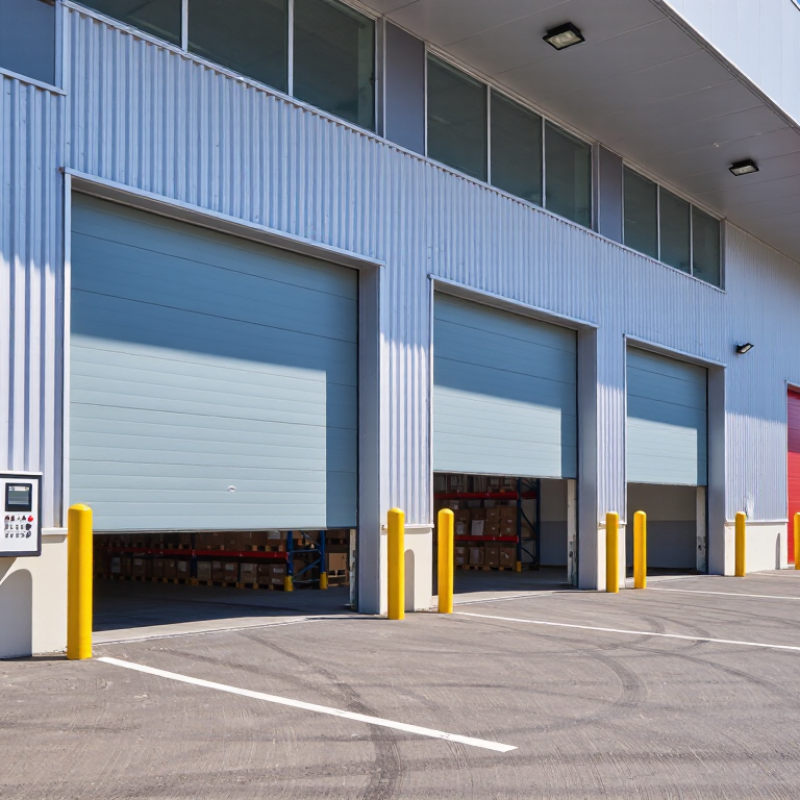
Commercial roll up doors are space-saving barriers used in warehouses, service bays, retail units, and loading areas. Their curtain consists of connected metal or insulated slats. When opened, the curtain coils around a barrel above the doorway. They save space.

A motor, chain hoist, or manual crank moves the curtain through side guides. A counterbalance system reduces lifting force and supports smoother operation. Modern designs may include emergency release devices, photo sensors, bottom-edge detection, and programmable controls. These features help reduce impact risks and improve daily traffic flow. In 2026, top commercial roll up doors should match the building’s opening size, cycle frequency, insulation needs, wind exposure, and security requirements. A common mistake is choosing by price alone. A door can look excellent on paper but fail early when guides are misaligned or maintenance is ignored.

Tips: Measure the opening twice. Check headroom and side clearance. Ask about rated duty cycles and replacement parts. Keep guides clean, inspect fasteners, and test safety devices regularly. Do not force a noisy curtain. That detail matters. A qualified installer should verify the structure, electrical supply, and operating controls before use. Even the best door needs proper adjustment.

Key Features of the Top Commercial Roll Up Doors in 2026

Commercial roll up doors in 2026 are judged by more than opening speed. The strongest designs combine dependable security, smooth operation, and practical energy control. Insulated steel curtains help stabilize interior temperatures in busy warehouses. Tight side guides and bottom seals also reduce drafts, dust, and light gaps.

Modern doors often include variable-speed motors and soft-start controls. These features reduce vibration, noise, and stress on moving parts. Photoelectric sensors can stop closing when a person, pallet, or vehicle crosses the opening.

Manual override systems remain important during power failures. They are less exciting, but they can prevent serious downtime. In field inspections, worn springs and poor alignment still cause many failures. Advanced controls cannot fix neglected maintenance.

Tips:

Measure the opening twice, including headroom and side clearance. Choose a corrosion-resistant finish for wash-down areas or coastal facilities. Ask for cycle-life ratings, emergency release details, and service access.

A clear inspection window can reveal frayed cables, unusual noise, or uneven movement early. Do not select the fastest door automatically. A high-speed model may need stronger controls and more frequent servicing.

Consider traffic volume, insulation needs, impact exposure, and available repair support. One overlooked detail can become an expensive weakness.

Main Commercial Roll Up Door Types and Their Applications

The leading commercial roll-up doors in 2026 serve different working environments. Standard steel doors suit warehouses, loading bays, and service garages. They provide practical security and tolerate frequent daily use. Insulated roll-up doors help control indoor temperatures in distribution centers and food storage areas. Their foam-filled slats can reduce drafts, although insulation alone cannot fix poor building seals.

High-performance doors fit busy facilities where speed matters. They are useful at manufacturing entrances, parking areas, and climate-controlled production rooms. Fire-rated rolling doors protect openings between fire compartments and require approved testing, regular inspections, and correct installation. Security grilles work well in retail storefronts and indoor shopping corridors, where visibility and airflow remain important. Counter shutters cover smaller openings, such as pharmacy counters, reception windows, and kitchen service points.

Tips: Measure the opening, headroom, side clearance, and cycle frequency before choosing a door. Ask for documented wind, fire, and insulation ratings. A common mistake is selecting a heavy door for a low-use opening. I have seen that choice increase maintenance without improving protection. Consider noise, cleaning access, emergency operation, and replacement parts. The “best” door may still perform poorly when the floor is uneven or the guides are misaligned. Regular checks should include curtains, springs, guides, seals, and safety sensors. Small defects become expensive when ignored.

How to Compare Commercial Roll Up Doors by Performance and Cost

What Are the 2026 Top Commercial Roll Up Doors?

How to Compare Commercial Roll Up Doors by Performance and Cost

The top commercial roll-up door is not always the cheapest option. Compare the door with your building’s traffic, temperature, and security demands. A warehouse door opening 300 times daily needs different hardware than a low-use service entrance. Check cycle ratings, opening speed, wind resistance, insulation, air leakage, and safety controls. Small details matter. A cold draft near a loading bay often signals poor sealing, not weak heating equipment.

Energy performance deserves careful attention. The U.S. Energy Information Administration’s 2018 Commercial Buildings Energy Consumption Survey reported that space heating represented about 32% of commercial building site energy use. Cooling accounted for roughly 9%. A well-insulated door can reduce heat transfer, but only when it closes reliably. An impressive R-value means little if employees leave the door open for several minutes. This is where real operating habits can defeat a good specification.

Cost comparison should include installation, controls, maintenance, repairs, and downtime. The U.S. Department of Energy recommends evaluating building systems through lifecycle costs, not purchase price alone. ASHRAE 90.1-2022 also provides useful energy-efficiency benchmarks for commercial building envelopes. DASMA technical guidance helps buyers review door safety, thermal performance, and installation factors. Ask for tested U-factor, air-infiltration results, cycle data, and service intervals. Quotes sometimes hide these details. That should make you pause. A practical review includes watching the door operate during a busy shift, measuring closing time, and checking seals at floor level. No comparison is perfect, but a measured site review is better than a glossy specification sheet.

What Are the 2026 Top Commercial Roll-Up Doors?

Comparison of typical U.S. installed cost ranges for common commercial roll-up door categories. Prices vary by opening size, structural requirements, controls, insulation, installation conditions, and local labor rates.

Standard service doors usually offer the lowest initial cost and are suitable for general warehouse and service openings. Insulated doors cost more but can reduce heat transfer and improve energy performance. High-performance doors generally provide faster operation and higher cycle capability, making them useful for busy logistics, manufacturing, and distribution facilities.

Safety, Maintenance, and Installation Requirements for 2026 Models

What Are the 2026 Top Commercial Roll Up Doors?

Safety and maintenance should define the best commercial roll up doors in 2026. The U.S. Bureau of Labor Statistics recorded 5,283 fatal workplace injuries in 2023. Rolling doors are not the sole cause, but crushing and struck-by risks demand serious planning. Choose doors with guarded moving parts, visible warning labels, emergency release systems, and tested photoelectric sensors. Operators should comply with ANSI/CAN/UL 325 requirements, while installation should follow the manufacturer’s tested configuration. A cheaper installation can create expensive weaknesses.

Maintenance needs a written schedule. Inspect curtains, guides, bottom bars, springs, fasteners, and limits at least monthly in busy facilities. Remove dirt from tracks before it becomes resistance. Listen for scraping. It often appears before failure. Fire-rated assemblies require qualified inspection and testing at least annually under NFPA 80. Records should include inspection dates, defects, corrective work, and technician qualifications. These details support accountability and may reveal repeated impact damage.

Installation teams should verify opening dimensions, structural support, wind exposure, electrical supply, and clearance before delivery. The U.S. Department of Energy’s Commercial Buildings Energy Consumption Survey shows space heating remains a major commercial energy use, so uncontrolled air movement deserves attention. High-cycle doors may reduce operational delays, but cycle ratings are not permission to ignore lubrication or alignment. In practice, even a well-specified door can fail when the floor is uneven or the operator is oversized. That part is easy to overlook.

What Are the 2026 Top Commercial Roll Up Doors? – Safety, Maintenance, and Installation Requirements for 2026 Models

This comparison ranks common commercial roll-up door configurations by application suitability. Final selection must be based on the building code, opening size, duty cycle, fire or wind exposure, operating environment, and the door manufacturer’s tested assembly.

Door Type Best-Fit Commercial Use Typical Performance Characteristics Safety Requirements Maintenance Requirements Installation Requirements 2026 Selection Checkpoints
1. Insulated Rolling Service Door Warehouses, loading areas, retail back rooms, workshops, and conditioned commercial spaces. Energy control
Double-wall slats with insulation; commonly selected where moderate thermal separation and daily use are required.
Provide a guarded or enclosed operating mechanism where personnel could contact moving parts. Use a monitored photoelectric sensor, sensing edge, or equivalent entrapment protection when required by the listed door operator. Install warning labels and an accessible emergency release. Inspect guides, bottom bar, curtain, fasteners, seals, and operator controls at least monthly in active facilities. Lubricate only components permitted by the manufacturer. Test the safety edge or photoelectric device after service and keep the guides free of debris. Verify lintel, jamb, headroom, side room, mounting surface, power supply, and structural support before fabrication. The curtain, guides, operator, and brackets must be installed as a listed or engineered assembly. Confirm U-factor or insulation data, wind-load design, cycle rating, electrical disconnect location, manual override, and compatibility with access-control or fire-alarm systems.
2. High-Performance Rolling Door High-traffic distribution centers, parking facilities, manufacturing plants, and temperature-controlled logistics areas. High cycle speed
Designed for frequent operation and reduced opening time; performance varies by door size, curtain design, and operator.
Use presence detection and entrapment protection appropriate to the closing speed and control system. Provide guarded access to the drive assembly, clearly marked controls, emergency stop functions where required, and safe traffic separation for pedestrians and vehicles. Establish a documented cycle-based service plan rather than relying only on calendar intervals. Inspect alignment, drive components, brakes, control panels, sensors, seals, and curtain attachment points. Record test results and corrective actions. The floor must be level and the guides accurately aligned. Electrical installation should include a properly sized branch circuit, disconnecting means, grounding, and controls installed by qualified personnel in accordance with applicable electrical requirements. Compare tested cycle rating, opening speed, sensor response, control redundancy, operating temperature range, acoustic performance, and integration with building automation systems.
3. Fire-Rated Rolling Door Fire separations in warehouses, commercial kitchens, service corridors, industrial facilities, and openings in rated walls. Fire compartmentation
A listed fire door assembly is intended to limit the passage of fire for its tested rating; the rating applies to the complete assembly, not only the curtain.
Keep the fire door path clear. Do not wedge, tie, block, or disable the curtain, fusible links, release mechanism, alarm interface, or closing device. The door must be able to close under the conditions specified by its listing and the adopted fire code. Inspect and maintain according to the applicable fire-door standard and local code. Fire-rated rolling doors generally require documented inspection and operational testing at least annually, with additional checks after damage, modification, or a failed test. Confirm the wall rating, opening protection requirement, clearances, sill and guide conditions, fusible-link or electronic release arrangement, and fire-alarm connection. Do not field-modify a listed assembly without approved engineering or listing guidance. Verify the listed fire-protection rating, label, smoke or heat release interface, drop-test procedure, inspection documentation, and authority-having-jurisdiction acceptance requirements.
4. Rolling Security Grille Retail storefronts, shopping centers, pharmacies, airports, and interior openings requiring visibility and controlled access. Visibility
Open-grille or perforated designs provide airflow and visual screening but generally offer less thermal and weather protection than solid curtains.
Protect users from contact with the grille, guides, hood, and operator. Provide an appropriate sensing edge or photoelectric protection, visible warning labels, controlled closing, and a manual release when required by the operator listing or code. Check grille links or slats, end locks, guides, hood, bottom bar, operator chain, and locking hardware. Remove accumulated dirt from tracks and verify that the grille remains balanced and travels without binding. Provide adequate headroom and side room, secure guide attachment, a suitable mounting substrate, and properly located control stations. Coordinate the grille with storefront framing, egress routes, and accessibility requirements. Review security level, visibility, ventilation, corrosion resistance, cycle rating, emergency egress strategy, remote-control permissions, and whether the opening needs a fire-rated closure instead.
5. Rolling Counter Door Service counters, concession areas, transaction windows, laboratories, schools, and interior commercial openings. Compact footprint
Smaller curtain and hood systems are suited to counter-height openings where floor space and headroom are limited.
Prevent access to pinch points at the sill, guides, and curtain. Controls should be positioned to avoid unintended activation and should include the protective devices required for the selected operator and opening. Inspect the curtain, guides, sill, locks, springs or counterbalance components, and operator. Keep the counter opening clear and investigate scraping, uneven travel, unusual noise, or increased operating force. Confirm finished opening dimensions, counter construction, hood clearance, guide alignment, and the availability of a suitable electrical supply if motorized operation is selected. Coordinate with millwork and fire-rated wall details. Check food-service or clean-area requirements, corrosion-resistant finishes, manual versus motorized operation, security needs, fire rating, and accessibility of the control location.
6. Wind-Load Rated Rolling Service Door Coastal, hurricane-prone, high-wind, exposed industrial, and large exterior openings. Wind resistance
Reinforced curtains and guides are engineered for a specified design pressure; the required rating depends on site exposure, opening size, building height, and local code.
Do not operate a damaged or visibly displaced door during severe weather. Use approved windlocks, guides, and retention components. Prevent personnel from standing in the opening during operation and follow the tested assembly’s operating limitations. Inspect windlocks, guide retainers, anchors, brackets, curtain slats, bottom bar, and fasteners after severe weather and during scheduled service. Replace bent or corroded components with approved parts, not improvised reinforcements. The installer must verify project-specific design pressure, substrate strength, anchor type, jamb condition, and attachment spacing. Installation must match the engineered or tested wind-load configuration. Request design-pressure documentation, positive and negative pressure values, approved installation details, corrosion protection, local wind-borne-debris provisions, and permit requirements.
7. Corrosion-Resistant Rolling Door Marine facilities, wastewater plants, car washes, food-processing support areas, chemical-service environments, and humid facilities. Harsh-environment use
Material and coating selection is more important than nominal appearance; resistance depends on the chemical exposure, cleaning process, and drainage conditions.
Maintain safe guarding and entrapment protection despite washdown or corrosive conditions. Electrical components must have environmental ratings suitable for the location, and standing water must not obstruct the door path or controls. Rinse or clean deposits using an approved method, inspect for coating breakdown and galvanic corrosion, and check fasteners, guides, seals, bearings, and drain paths more frequently in aggressive environments. Specify compatible metals, coatings, fasteners, seals, and operator enclosures. Prevent dissimilar-metal contact where galvanic corrosion is possible and provide drainage away from the guides and sill. Define chemical exposure, washdown pressure, cleaning agents, temperature, humidity, sanitation requirements, corrosion class, enclosure ratings, and replacement-part availability.
Safety and compliance note: Requirements vary by jurisdiction and by the door’s listed assembly. Design and installation should be coordinated with the adopted building, fire, electrical, accessibility, and workplace-safety requirements. Common references may include OSHA requirements for machine guarding and lockout/tagout, applicable electrical codes, NFPA requirements for fire-door assemblies, and the manufacturer’s installation and service instructions. A qualified professional should verify the final specification.
Procurement baseline for 2026 projects: Request the complete product data sheet, tested or engineered wind-load information, cycle rating, safety-device details, fire or smoke listing when applicable, installation drawings, maintenance instructions, electrical requirements, warranty terms, and documented inspection procedures before approval.
Go to Top