Top 10 Double Garage Door Types and Sizes to Know?
Choosing a double garage door is not simply a matter of selecting the widest attractive design. It affects vehicle clearance, daily access, insulation, security, and the appearance of your home. A double garage door can also expose measurement mistakes more clearly than a single door.
Tom Wadsworth, a longtime garage door industry educator, states, “The garage door is the largest moving object in most homes.” That observation deserves attention. Its weight, spring system, tracks, and opener must work together safely. This guide examines ten common double garage door types and sizes, including sectional, carriage-house, rolling, side-hinged, full-view, and insulated designs. Typical widths range from 14 to 18 feet, while heights often measure 7 or 8 feet. Custom dimensions remain possible.
Small details matter.
A 16-by-7-foot opening may suit two compact vehicles, yet large mirrors or roof racks can reduce comfortable clearance. Measure the finished opening, side room, headroom, and backroom before ordering. Check the door’s R-value when the garage connects to living space. Consider wind performance, panel material, window placement, and opener compatibility as well. Some choices look impressive in photographs but feel impractical after installation. That is an easy mistake to make. The recommendations ahead offer useful direction, but manufacturer specifications and professional site measurements should guide the final decision.
Common Double Garage Door Types and Their Key Features
Common Double Garage Door Types and Their Key Features
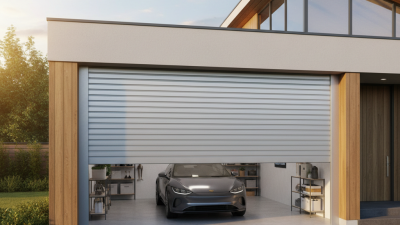
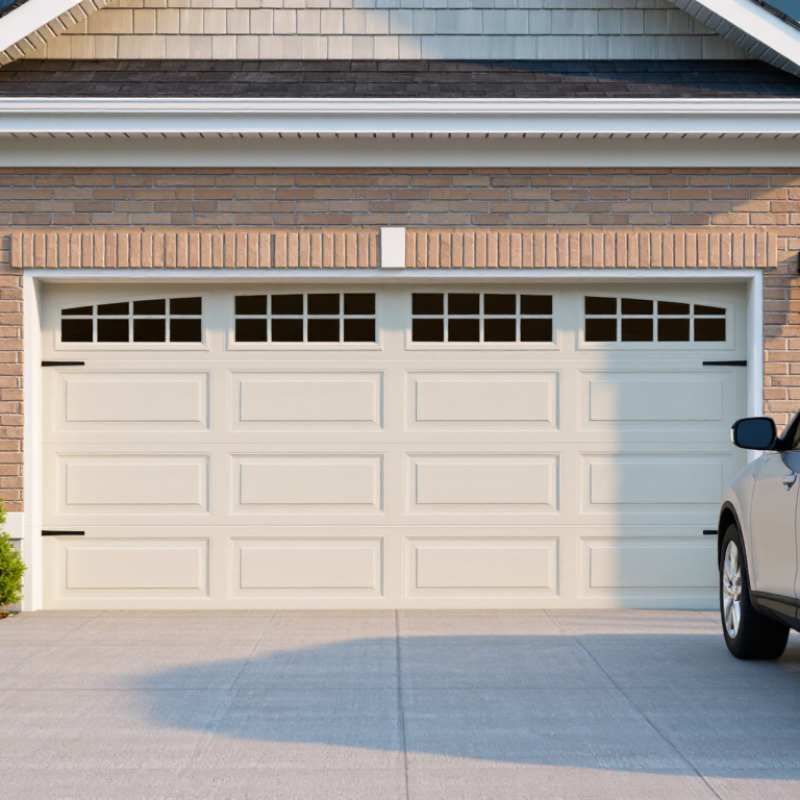
Double garage doors usually measure about 4.8 to 5.5 metres wide. Height often ranges from 2.1 to 2.4 metres. Sectional doors use horizontal panels that travel vertically, then rest beneath the ceiling. They save driveway space and can include insulation, windows, and reinforced locks. Roller doors coil into a compact drum above the opening. They suit garages with limited ceiling clearance, although their slatted design may provide less insulation.
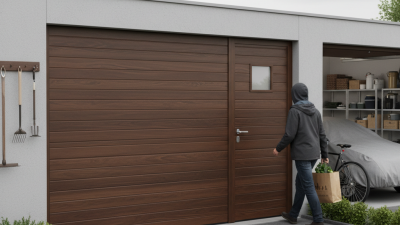
Side-hinged doors open outward like traditional entrance doors. They offer simple operation, easy servicing, and a useful pedestrian opening. However, snow, parked vehicles, or a short driveway can limit their practicality. Sliding or bi-fold designs may suit unusual openings, but their tracks need careful alignment. I have found that small installation errors can create noticeable noise and uneven movement. That detail is easy to underestimate.
Tips: Measure the opening, internal headroom, side clearance, and driveway depth before choosing a door. Check the door’s insulation rating if the garage connects to living areas. Steel offers strength, while aluminium reduces weight and corrosion concerns. Wood provides a warm appearance but needs regular maintenance. Ask an experienced installer to assess tracks, springs, drainage, and wind exposure. Do not choose a door from appearance alone. Controls should include secure access features and manual release options for power failures.
Standard Double Garage Door Dimensions and Size Options
Top 10 Double Garage Door Types and Sizes to Know?
A double garage door usually serves two vehicles, but “standard” is not universal. DASMA Technical Data Sheet 165 identifies 16 feet wide by 7 feet high as a common residential size. Other practical options include 16 by 8 feet, 18 by 7 feet, and 18 by 8 feet. A 20-foot width can improve vehicle access, especially beside storage shelves or bicycles.
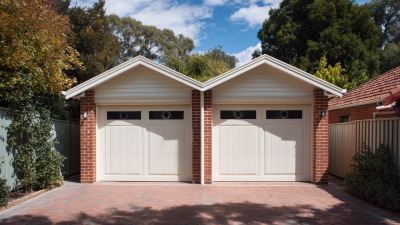
Sectional doors suit most attached garages. Roll-up doors can help when ceiling space is limited. Carriage-style doors add visual character, while full-view designs bring more daylight. The door type does not determine the opening size alone. The vehicle length, mirror width, track space, and opener position also matter.
Measure carefully.
Measure the finished opening at three points. Check both side jambs and the ceiling. The rough opening often matches the door’s nominal size, but framing and weather seals reduce usable clearance. Many torsion-spring systems need about 12 inches of headroom, although low-headroom hardware changes that requirement. The U.S. Department of Energy’s Building America guidance also stresses continuous sealing around garage openings for energy performance. In practice, I have seen a 16-foot door feel cramped after shelving was installed. An 18-foot opening may be wiser for large SUVs, but it costs more and needs stronger structural planning. DASMA guidance and local building requirements should be checked before ordering.
Measuring Your Garage for a Double Door Replacement
Measuring your garage carefully is the most important step before replacing a double garage door. I recommend using a steel tape, not a flexible sewing tape. Measure the finished opening at the top, middle, and bottom. Record the smallest width. Then measure the opening height on both sides and in the center. Older garages often settle unevenly.
Do not measure only the existing door panel. Check the space above the opening, called headroom, and the side clearance beside each jamb. Measure the distance from the opening to the rear wall as well. This backroom must fit the horizontal tracks and the opener equipment. Keep notes on paper. Small errors become expensive later.
I once trusted a single width measurement and missed a slight masonry shift near the floor. That mistake changed the replacement plan. I now measure twice and photograph each corner. Check whether the floor slopes, whether the jambs are square, and whether cables or lights obstruct the tracks. A double door may require different clearance than two separate doors. Leave unusual framing to a qualified installer. Measure again after removing trim, if possible. Be careful there. Removable trim can hide the true opening.
Choosing the Right Double Garage Door for Your Property
Choosing the Right Double Garage Door for Your Property
A double garage door should suit your home, driveway, and daily routine. Common options include sectional, roller, side-hinged, and tilt-up designs. Sectional doors usually need about 16 feet by 7 feet, while 18 feet by 7 feet offers more space for larger vehicles. However, standard sizes do not fit every property. Measure the opening, side clearance, ceiling height, and interior depth before choosing.
Material also affects the decision. Steel offers strength and low maintenance, while timber creates a warmer appearance but needs regular care. Insulated panels can reduce outdoor noise and help stabilize the garage temperature. In practical installations, poor headroom planning causes avoidable problems. A door may fit the opening but still interfere with lighting, storage racks, or an automatic opener. That detail is easy to miss.
Tips: Watch the door move before approving the installation. Listen for scraping, shaking, or uneven movement. Check whether the door seals evenly against the floor. Consider wind exposure, rain direction, and the slope of your driveway. A darker finish may look attractive, yet it can show dust quickly. I would not choose appearance alone. Professional measurements are worthwhile, although even experienced installers can overlook unusual framing or old masonry. Recheck those areas before ordering.
Top 10 Double Garage Door Types and Sizes to Know
Typical nominal opening dimensions for common double garage door configurations
Double garage doors are commonly available in widths from 16 to 24 feet and heights from 7 to 9 feet.
Sectional, roller, side-hinged, slide-to-side, and tilt-up designs may use different track, headroom,
and installation requirements. Always verify the finished opening, structural clearance, and vehicle height
before selecting a door.